Koreans are always fascinated by the dramatic sagas of their powerful chaebol families, and this post offers a nostalgic yet critical look at the shifting tides of corporate power, reminding everyone of the giants that rose and fell.
Chaebols are large, family-owned business conglomerates that have historically dominated South Korea's economy, often through intricate cross-shareholding structures and dynastic succession, playing a massive role in the nation's development.
Koreans are always fascinated by the dramatic sagas of their powerful *chaebol* families, and this post offers a nostalgic yet critical look at the shifting tides of corporate power, reminding everyone of the giants that rose and fell. It's a whirlwind tour through the tumultuous history of South Korea's biggest conglomerates, showcasing how these titans of industry have navigated everything from national crises to brutal family feuds.
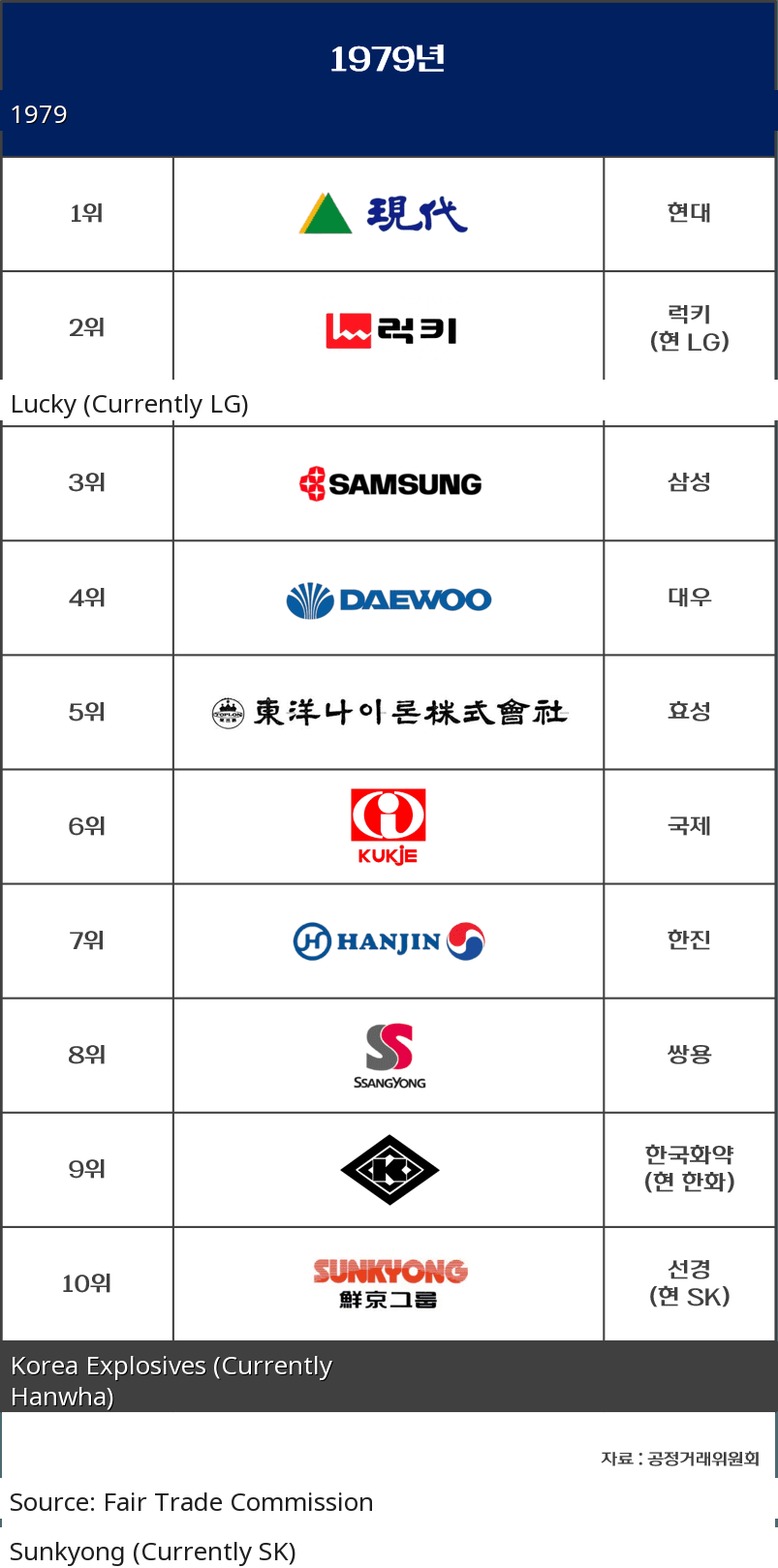
The timeline kicks off in 1979 with the assassination of President Park Chung-hee and the second oil crisis, setting the stage for an era of intense change. The early 80s saw the passing of founding figures like Kim Jong-hee of Korea Explosives (now Hanwha) and the rise of new leaders. A major shake-up came in 1985 when the International Group, then the 6th largest *chaebol*, collapsed due to bankruptcy. The late 80s brought more leadership changes, most notably the passing of Samsung founder Lee Byung-chul and the ascension of his son, Lee Kun-hee, in 1987.
The 90s were a period of rebranding and bold declarations. Korea Explosives became Hanwha, Lucky-Goldstar became LG, and in 1994, Samsung's Lee Kun-hee famously declared his "*New Management*" philosophy in Frankfurt, urging his executives to "change everything but your wife and children." But the decade's biggest shockwave was the 1997 *IMF Crisis*, which triggered a cascade of corporate failures and restructurings. Daewoo, Ssangyong, and Kia, once major players, either declared *workout* or went bankrupt, leading to massive shifts in the *chaebol* rankings. SK Group, then known as Sunkyong, also saw a leadership change with Choi Tae-won taking the helm.
The new millennium brought more drama. Hyundai, then the top *chaebol*, was rocked by the "*Princes' Rebellion*" – a fierce management dispute among founder Chung Ju-yung's sons – leading to the group's dramatic split into multiple entities like Hyundai Motor Group and Hyundai Heavy Industries. The 2000s also saw the final collapse of Daewoo Motors and the separation of GS Group from LG. The 2010s continued the trend of internal strife, with Kumho Group experiencing its own "*Brothers' Rebellion*" and subsequent *workout* declarations. Major deals included SK Group acquiring Hynix Semiconductor in 2012 and the "Samsung-Hanwha Big Deal" in 2014, where Samsung offloaded its defense and petrochemical units. Lotte also faced its own "*Brothers' Rebellion*" in 2015, forcing governance reforms.
The late 2010s and early 2020s have been marked by further generational transitions, with new chairmen taking over at LG, Hanjin, Samsung, Hyundai, and Lotte. Acquisitions continue to reshape the landscape, such as Hyundai Motor Group's purchase of Boston Dynamics and SK Group's acquisition of Intel's NAND business. This epic timeline is a stark reminder that even the most powerful corporate empires are in a constant state of flux, driven by ambition, innovation, and sometimes, sheer survival.