This is trending because it's a major scientific breakthrough offering new, detailed insights into the social structure and practices of a significant ancient Korean kingdom, challenging previous assumptions about incest and human sacrifice.
Silla was one of the Three Kingdoms of Korea (along with Goguryeo and Baekje), a pivotal period in early Korean history. The concept of *Sunjang* (human sacrifice) and its abolition by King Jijeung are important historical points.
A groundbreaking new DNA analysis of ancient remains from the Silla Dynasty has sent shockwaves through Korean internet culture, revealing surprising and often dark truths about the kingdom's social structure. Researchers from Seoul National University, Yeungnam University, Sejong University, and Germany's Max Planck Institute analyzed 78 sets of human remains from 44 Silla tombs, reconstructing 13 family trees and 54 kinship pairs.
The findings are a major historical re-evaluation. Firstly, it turns out that incest, specifically marriages between relatives within the fourth degree, wasn't just an elite practice but was widespread across Silla society. Secondly, the study shed light on *Sunjang* (human sacrifice), revealing that it wasn't just about sacrificing outsiders. Instead, specific social classes were designated for sacrifice, and this status was often hereditary, with parents and children sacrificed together – essentially, entire 'branch families' dedicated to this grim fate. Interestingly, no Jomon (ancient Japanese) DNA was found among the remains.
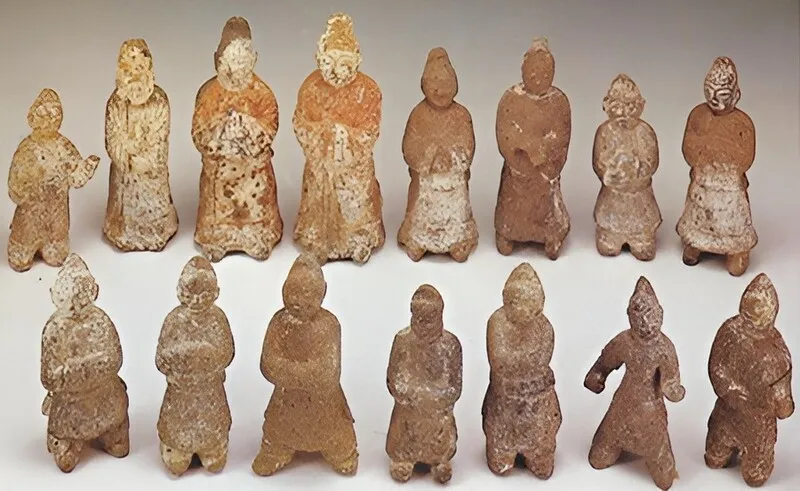
The research also touched upon the abolition of *Sunjang*. While it's often attributed to the spread of Buddhism or Confucianism, historical records from King Jijeung's reign in 502 AD suggest a more pragmatic reason. At that time, agricultural technology was advancing rapidly, with the introduction of *Ugyeong* (ox-plowing) and expanded irrigation. The most compelling theory is that *Sunjang* was abolished to preserve the vital labor force needed for this agricultural boom. It's also worth noting that *Sunjang* wasn't unique to Silla; it was practiced in other ancient Korean kingdoms like Goguryeo and Baekje, as well as in China and Japan (where it was later replaced by *Haniwa*, clay figures).