Koreans are highly interested in global rankings and how their country and capital, Seoul, compare. This post sparks discussion by highlighting cities with over 10 million administrative residents, especially since Seoul's administrative population recently dipped below that mark.
For Koreans, a city reaching or maintaining a 10-million population is a significant benchmark of global status, especially for Seoul. There's a keen interest in comparing Seoul's standing with other major world cities, often distinguishing between administrative and metropolitan area populations.
Ever wondered which cities truly earn the title of 'megacity' by population alone? Koreans are buzzing about a list that dives deep into cities with over 10 million residents within their *administrative boundaries*, not just their wider metropolitan areas. For a country where Seoul's administrative population recently dipped below 10 million (though its greater metro area is still a whopping 26 million!), this topic sparks a lot of discussion about global urban giants.
The original post, from a popular Korean internet forum, highlights that while a million people makes a city 'major,' 10 million makes it a 'super-megacity.' It's a fascinating look at how different countries define and count their urban populations, with some surprising results.
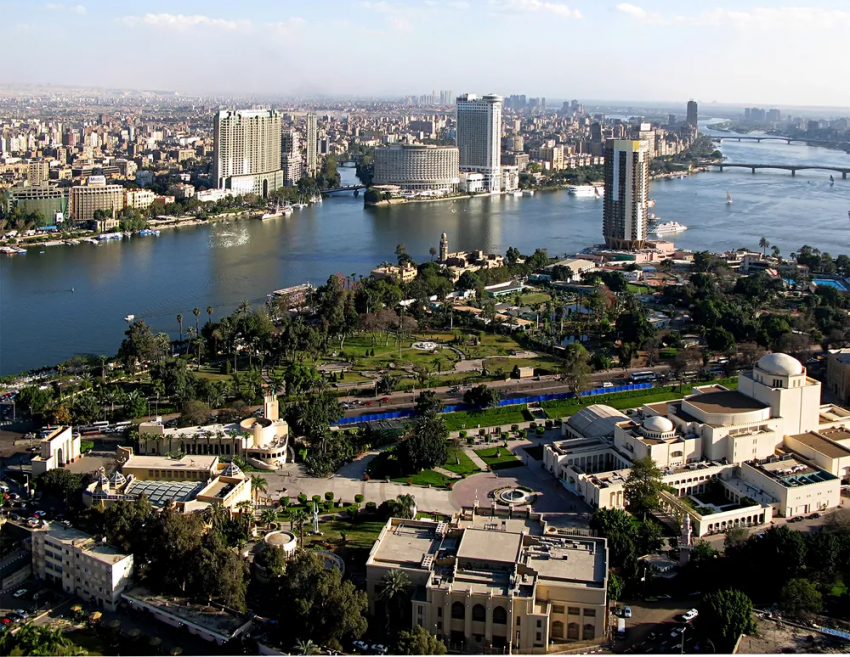
First up, **Cairo, Egypt**, with around 10.1 million people. Given Egypt's vast deserts, most of its population clusters along the Nile, making its effective population density incredibly high. They're even building a new administrative capital outside Cairo to manage the booming population!
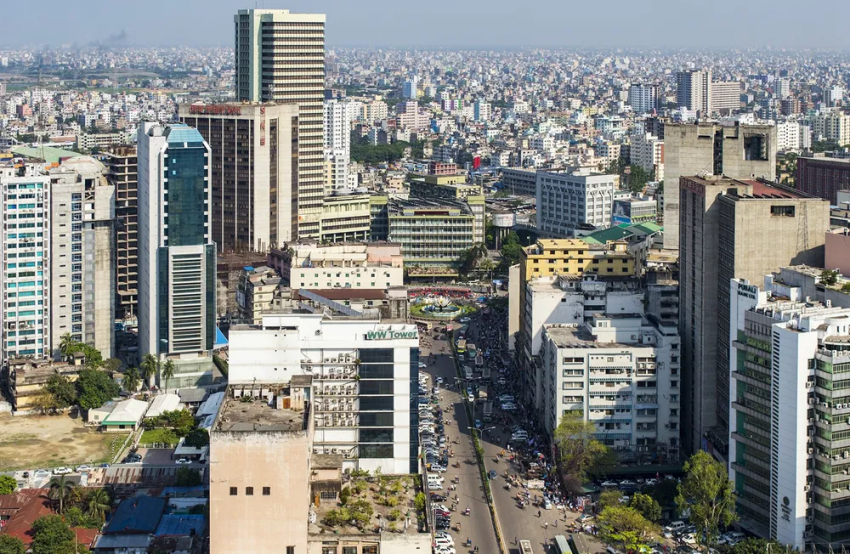
Then there's **Dhaka, Bangladesh**, at about 10.27 million. Bangladesh, smaller than the Korean Peninsula but with more people than Russia, boasts the world's highest population density (excluding micro-states). Talk about the power of the Bengal Delta!
China makes its first appearance with **Qingdao** (10.44 million), known for its proximity to Korea and frequent flights. It's Shandong province's largest city, though not its capital. Get ready, because China is going to dominate this list!
**Bangkok, Thailand**, comes in at 10.53 million, showcasing Thailand's extreme urban concentration, a phenomenon often called the 'primate city' effect (종주도시화). Its second-largest city, Chiang Mai, doesn't even hit a million.
**Jakarta, Indonesia**, with 11.84 million, is another example where the administrative area is small. Its greater metropolitan area is estimated to be a staggering 30-40 million! It's growing, but still overshadowed by China and India.
More Chinese cities follow: **Hangzhou** (11.93 million), host of the 2023 Asian Games, and **Suzhou** (12.74 million), located between Nanjing and Shanghai.
**São Paulo, Brazil**, is South America's largest city at 12.28 million, though many still associate Brazil more with Rio de Janeiro.
India joins the list with **Bengaluru** (12.76 million), its third-largest city and an IT hub, formerly known as Bangalore.
Next, **Xi'an, China** (12.95 million), a historic city that served as the capital for many ancient Chinese dynasties, boasting countless relics. It's the largest city in Northwest China.
**Lahore, Pakistan** (13 million), Pakistan's second-largest city, sits right on the Indian border, famous for its elaborate flag-lowering ceremony.
**Moscow, Russia** (13.15 million), is another prime example of a primate city, with a whopping 10% of Russia's population living there.
More Chinese cities: **Wuhan** (13.73 million), infamous as the origin point of COVID-19, and **Tianjin** (13.73 million), one of China's four *direct-controlled municipalities* (직할시). It's historically significant (Tianjin Treaty) but often overshadowed by Beijing for tourism.
**Ho Chi Minh City, Vietnam** (14 million), Vietnam's largest city and former capital of South Vietnam. Originally Saigon, it was renamed in 1976 after unification. Its population recently surged due to administrative boundary changes.
**Tokyo, Japan** (14.26 million), a truly global metropolis. This figure represents the entire Tokyo Metropolis; the core 23 wards of Tokyo are slightly under 10 million.
**Istanbul, Turkey** (16.04 million), Europe's most populous city, straddling Europe and Asia across the Bosphorus. Most major tourist sites are on the European side.
**Kinshasa, DR Congo** (16.31 million), likely the poorest city on this list. A large population doesn't always equate to prosperity, though DR Congo itself has over 100 million people.
**Lagos, Nigeria** (16.63 million), the largest city in Africa's most populous nation. Despite poverty, its status as a major city means it shows signs of significant development.
More Chinese powerhouses: **Shenzhen** (17.49 million), a city that exploded in growth after being designated a special economic zone during China's reform and opening-up. It's now China's fourth-largest city, heavily influenced by, and now arguably overshadowing, nearby Hong Kong.
**Guangzhou, China** (18.67 million), part of the Pearl River Delta, which, when combined with cities like Dongguan, Shenzhen, Foshan, and even Hong Kong/Macau, forms a mega-region of 70-80 million people – potentially the world's largest urban area!
**Karachi, Pakistan** (20.38 million), Pakistan's largest city, and infamously, the largest city in the world *without a subway system*! It was Pakistan's capital post-independence before moving to Islamabad.
**Mumbai, India** (20.66 million), another Indian giant. India is set to conduct its first official census in 15 years this year, so these numbers might shift!
More Chinese cities: **Chengdu** (21.26 million), capital of Sichuan province and a representative city of Western China. **Beijing** (21.43 million), China's capital and political heart, rich in historical sites.
**Delhi, India** (21.58 million), India's largest city and capital (specifically, New Delhi, a satellite city within the Delhi National Capital Territory).
**Shanghai, China** (24.87 million), China's economic powerhouse. While it has a larger population than Beijing, the debate over which is China's 'true' largest city continues.
Finally, **Chongqing, China** (32.05 million), officially the most populous city in the world. However, as the post points out, no Chinese person truly considers it the 'largest city' in the traditional sense. Why? Because its administrative area is an astounding 82,403 square kilometers – 82% the size of South Korea! It was elevated to a *direct-controlled municipality* (직할시) in 1997 by separating it from Sichuan province, essentially managing a vast region that includes both urban and rural areas. The 'actual' city of Chongqing is much smaller.
China alone boasts over 20 cities with populations exceeding 10 million, many due to these massive administrative areas that encompass both urban centers and surrounding rural regions. This is why, unlike many other countries where the metropolitan area population is much larger than the administrative city population, China often sees the reverse.
Seoul, which broke the 10 million mark in 2016 and now stands at 9.3 million (administrative), still holds its own as a *world-class* (월클) city when considering its greater metropolitan area of 26 million. Other global giants like New York, London, and Paris also have administrative populations around 9 million or less, but their extended metropolitan areas easily surpass 10 million. For instance, Paris, which hasn't expanded its core administrative boundaries since the 19th century (imagine Seoul staying within its *Four Great Gates* (사대문안) area!), has only 2.1 million within its city limits but over 10 million in its metro area.
So, while the numbers might be tricky, it's clear that Seoul, along with other major global hubs like Los Angeles, Osaka, Manila, Tehran, Mexico City, and Buenos Aires, are definitely in the 10-million-plus club when you look at the bigger picture. Seoul is truly *world-class* (월클)!