TL;DR — IN KOREAN VIBES
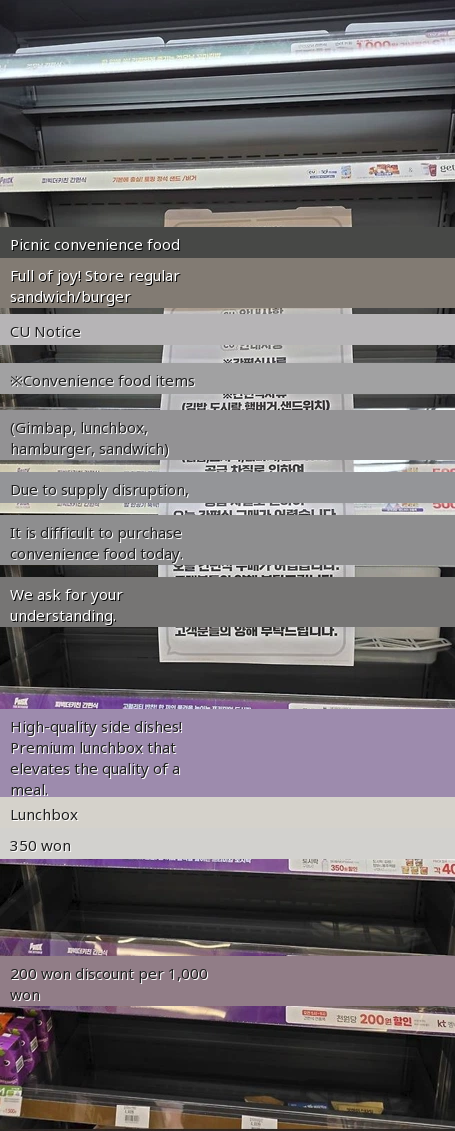
This situation is trending because it highlights the severe economic impact of ongoing labor disputes in South Korea, particularly how they affect everyday life through disruptions to essential services like convenience stores. CU's decision to consider suing individual strikers has also ignited a fierce debate about labor rights and corporate responsibility.
🗣 KOREAN YOU JUST LEARNED
CU
CU
CU is one of South Korea's largest and most ubiquitous convenience store chains, offering a wide range of products and services, from food and drinks to banking and package delivery.
화물연대
Cargo Workers' Solidarity
The Cargo Workers' Solidarity (화물연대) is a major labor union in South Korea representing truck drivers and other cargo transport workers, known for organizing strikes to advocate for better working conditions and pay.
원
Korean Won
The Korean Won (₩) is the official currency of South Korea, with 'millions to tens of millions of Won' representing a substantial sum, equivalent to thousands to tens of thousands of US dollars.
노란봉투법
Yellow Envelope Law
The 'Yellow Envelope Law' (노란봉투법) is a proposed or existing labor law in South Korea designed to limit the scope of damages that companies can claim against unions or individual workers during strikes, aiming to protect workers' rights to collective action.
HOW DID THIS HIT YOU?
🇰🇷 KOREAN REACTIONS 1
translated from the original Korean post
1.
Apparently, even before this protest started, the Cargo Workers' Solidarity (화물연대) didn't follow the official procedures to be recognized as 'employers' by the Labor Relations Commission under the Yellow Envelope Law (노란봉투법). Plus, they didn't even reach out to the Ministry of Labor's committee for support on collective bargaining, according to the Ministry of Labor itself.
♥ 0
DISCUSSION 💬
join the conversation