This post went viral because it directly addresses a frequently discussed and often controversial topic in Korea: the perceived inefficiency and gender-based assignments within the fire department's administrative roles. It sparked a heated debate by attempting to debunk a popular narrative, only to reveal deeper complexities and conflicting views on firefighter career paths and the nature of their duties.
개드립에 주기적으로 올라가는 글 중에
소방 조직이 현장은 턱 없이 부족하고 행정은 정원 초과됐다
여성 소방공무원 비율 맞추려고 행정직을 초과해서 받는다
라는 뉘앙스로 가는데 그게 아님
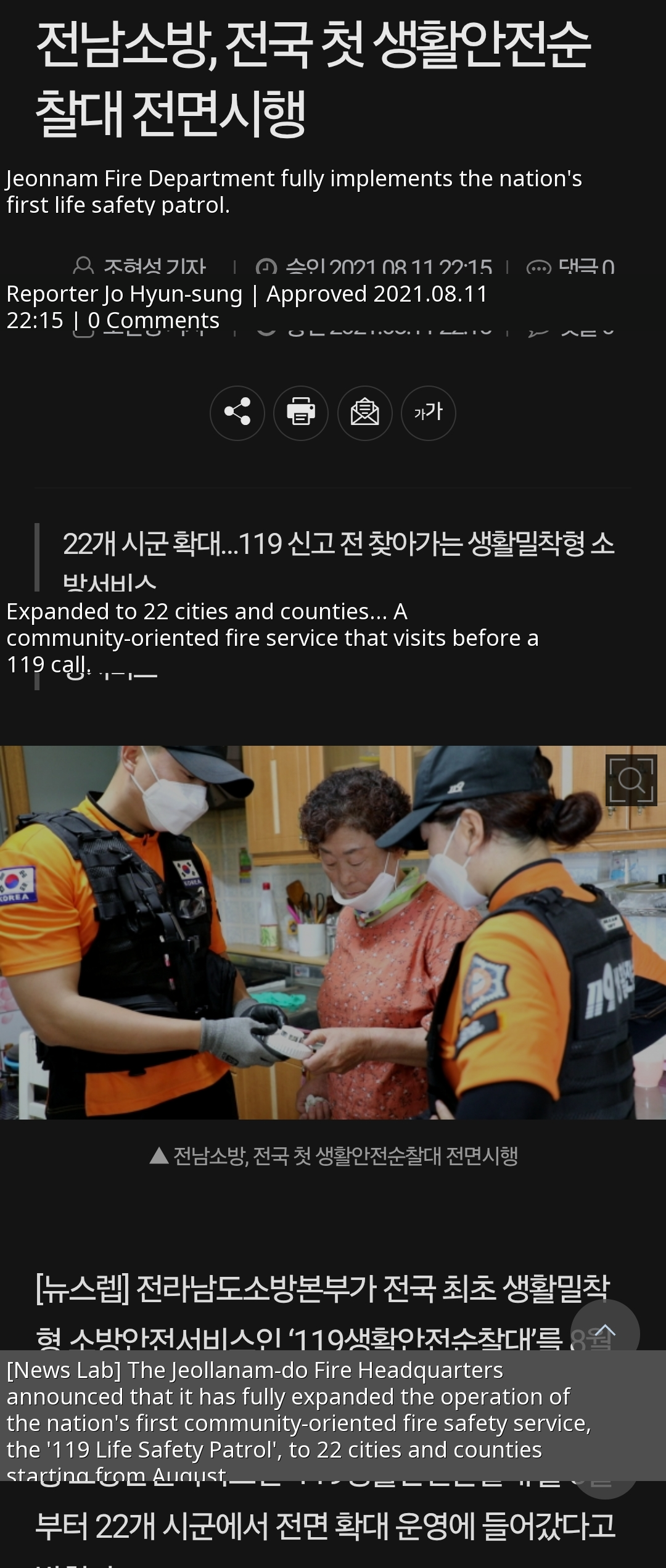
전남은 생활안전순찰대라고 전국에서 아무데도 안하는 업무를 하고있음. 하는 일은 그냥 시골 노인내들 전등 갈아주고 문고리 부러진거 있으면 고쳐주고 하는 일임. 이게 소방에서 해야할 일인가 싶긴한데 막상 노인내집 가면 등도 못갈아서 밤에 불도 못키는 할매할배들 많아서 누군가는 해줘야됨. 그러다보니 소방에서 도맡아서 하는거
근데 이 보직이 전국에서 심지어 소방청에서도 인정하는 보직이 아니다 보니 정원에 없는 업무임.
그러다보니 이 업무는 파견자,지원근무자로 운영을 하고 있음. 적은곳은 2명 많은곳은 3명 정도
이런 내면을 보지 않고 데이터만 보니 여자 소방관들 무쓸모라 내근으로 다 짬처리한거 아니냐! 하는거지. 그리고 오히려 여자들도 내근 안가려고 용쓴다. 여직원들끼리는 내근 안가는 방법까지 공유돼있어서 통신요원이나 화재조사요원처럼 비인기 교대직으로만 돈다.
행정자체가 소방 조직에서 존나 기피하는 부선데 누군가는 해야되니까 울며 겨자먹기로 하는거임.
🇰🇷 KOREAN REACTIONS 10
This is just one example, the biggest problem is the endless increase in administrative tasks. Firefighters should be working as firefighters, not like general admin staff. It's all because they work like general public servants. Project proposals, policy discovery, useless evaluation metrics for agencies – these idiotic higher-ups want new policies and projects every year. Why? Because they want something unique to show off in their reports! Section chiefs to station chiefs, station chiefs to headquarters chiefs, headquarters chiefs to provincial governors, lol. If you look at these guys, most of them have never properly put out a fire in the field. They spend their whole lives bouncing between internal admin and HQ admin, playing with budgets and reporting with a single sheet of paper, so they emphasize 'public servant' in 'fire public servant' instead of 'fire.'
Firefighters who want promotions usually have two choices: 1. Go into admin and tough it out. 2. Study like crazy for promotion exams at field centers. Why tough it out in admin? Because you get good performance evaluations (근평). So what about getting promoted by working in the field? You use the benefits of shift work to study like crazy for promotion exams. Why? Because field centers don't give good evaluations. So what the original poster said is just pie-in-the-sky talk from someone who doesn't know the reality of firefighting.
What are you talking about? Field work in the fire department doesn't get good evaluations, admin gets good evaluations;;
People try to boost their self-esteem by hating, but if you fight them with cowardly facts, they just get mad lol.
As I'm writing, I'm getting annoyed, so let me add one more thing: there was an item in the agency evaluation that deducted points if an assault on a paramedic occurred, f***ing lmaooo. If they deduct points for that, would station chiefs and section chiefs, who are desperate for good evaluations, try to gloss over an actual firefighter victim or actively help them?
The biggest thing is because of performance evaluations. Since everyone avoided admin, they made it mandatory to have admin experience for evaluations, which is a huge deal. Many fire teams barely go out once a day, and working the dangbibi (24-hour shift, 24-hour off, 24-hour on) schedule is super chill, so everyone wants to go to the field.
But is it right for them to be absent from field work for such tasks (like the Life Safety Patrol)? The ultimate purpose of firefighters is fire suppression and crisis management, but this doesn't apply to either and rather negatively affects their original purpose.
I think that work (Life Safety Patrol) should be done by community centers (주민센터), not firefighters. Managing fire facilities in buildings or conducting fire drills seems more appropriate for firefighters.
Field work doesn't get good evaluations... but it's true that if you get tired from field work, you come to admin. However, most people take leave rather than coming to admin.
This seems to be a problem for all public servants. Society demands more and more, and there are many welfare-oriented policies, but the number of personnel isn't increased proportionally.