The post went viral because it sparked a fierce debate about whether expressing gratitude to an employer is a genuine human gesture or a sign of internalized worker exploitation — a tension that hits especially hard in Korea's notoriously tough part-time job market. The pile-on also drew backlash against the pile-on itself, turning it into a multi-layered discourse about online mob behavior.
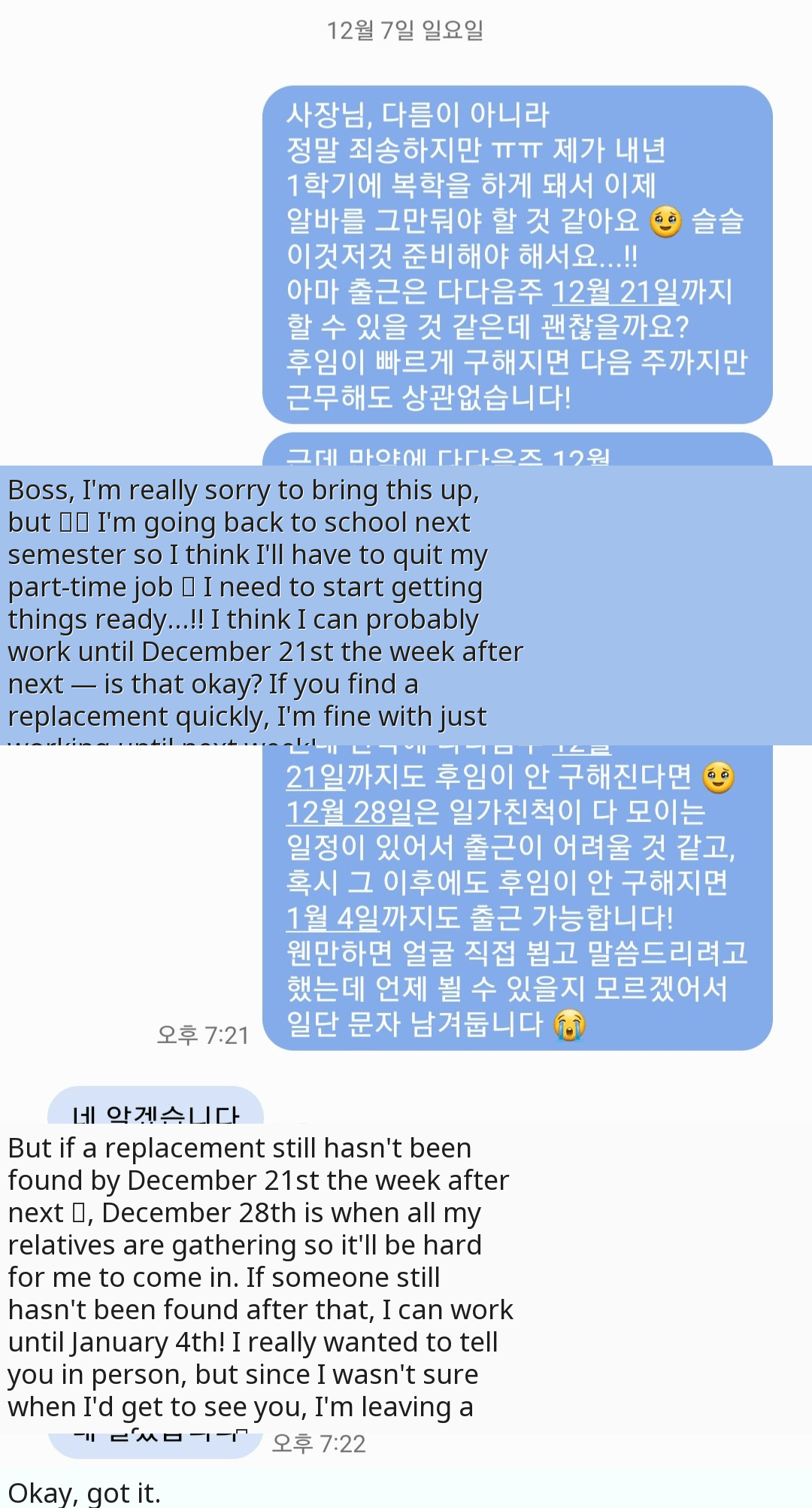
A wholesome farewell moment turned into an unexpected internet pile-on in Korea this week. A college student who worked part-time at a convenience store decided to quit ahead of her return to school next semester. Before leaving, she sent her boss a polite, thoughtful resignation text — offering to stay on as long as needed to help find a replacement, even pushing her last day back to January if necessary. On her final shift, her boss told her she'd been the most hardworking and detail-oriented part-timer he'd ever had. Touched by the kind words — and by the fact that this was her first job that actually paid minimum wage (a bigger deal than it sounds in Korea, where wage theft at part-time jobs is rampant) — she brought him snacks and a handwritten letter as a thank-you.
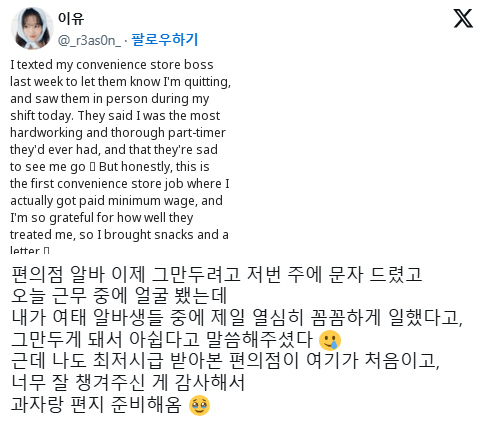
She posted about it on Korean Twitter (X), clearly just wanting to share a warm moment. Instead, she got absolutely torched.
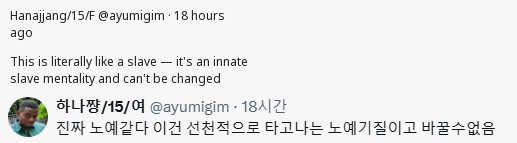
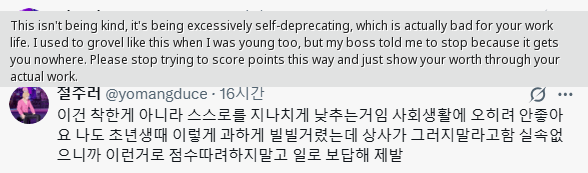
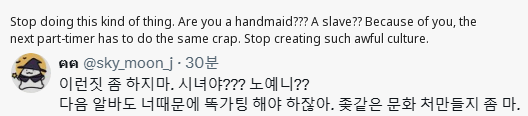
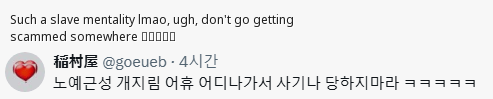
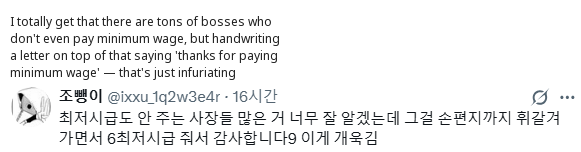
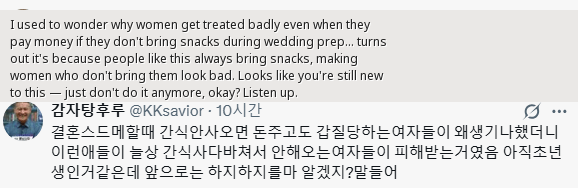
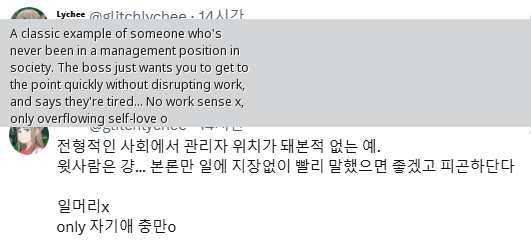
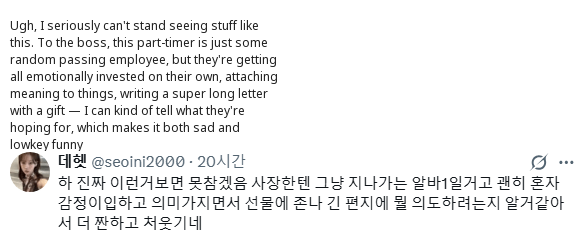
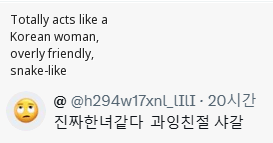
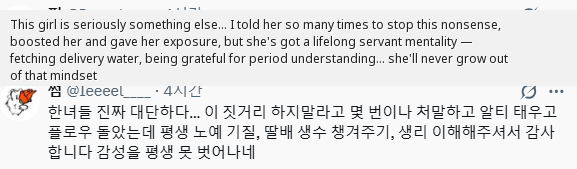
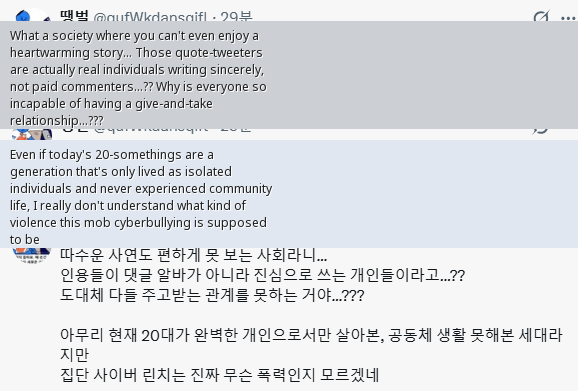
The quote-tweets came in fast and brutal. People called her a 'born slave,' accused her of having a 'servant mentality,' and claimed she was setting a toxic precedent that would pressure future part-timers at that store to do the same. Some said she was embarrassingly over-invested in a job where she was 'just another temp worker #1' to the boss. Others framed it as a uniquely Korean female tendency to over-accommodate authority figures — a criticism that got pretty heated.

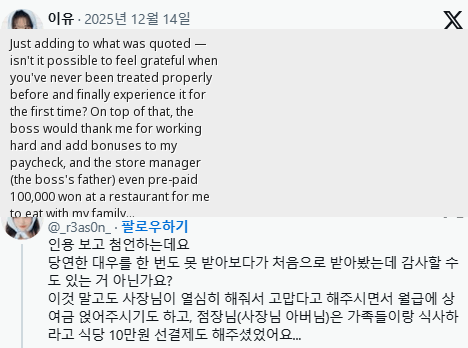
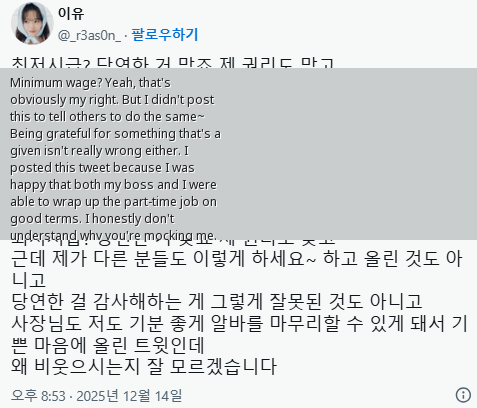
But the original poster fought back. She clarified that her boss had also given her bonuses on top of her wage, and the store manager (the boss's father) had even pre-paid 100,000 won (~$75) at a restaurant so she could treat her family to a meal. She wasn't saying everyone should do this — she just genuinely felt grateful and wanted to end things on a good note. 'Why are you laughing at me for that?' she asked.
The post blew up because it split Korean internet opinion right down the middle: one side sees her gesture as sweet and human, the other sees it as a symptom of a culture that conditions workers — especially young women — to over-perform gratitude toward employers who are simply doing the legal minimum. Both sides have a point, and that's exactly why it's still going.
🇰🇷 KOREAN REACTIONS 10
People who talk like that online — you can already tell what kind of worker they'd be lmaooo
These people want a warm and caring partner in their personal life but the moment someone is genuinely kind as a person they call it being a slave and falling behind. Make it make sense.
They're roasting her because this is something that could never happen in their own world — they literally can't process it with the knowledge they have
There are people out there who genuinely think being friendly = low self-esteem, and they use it to put others down
Setting aside everything else... a part-timer bringing a letter and a gift does feel a little surreal ngl
Don't even bother responding to those idiots
Online communities are full of people who never made it out into the real world. Normal people should just feel sorry for them, not get hurt by them — that's literally their whole reality
The era of calling out idiots is over. Now we live in the era where idiots call YOU out.
Whoever she works for next is gonna love her
Knowing how to say 'thank you' and 'I'm sorry' in person is genuinely a skill people need to learn