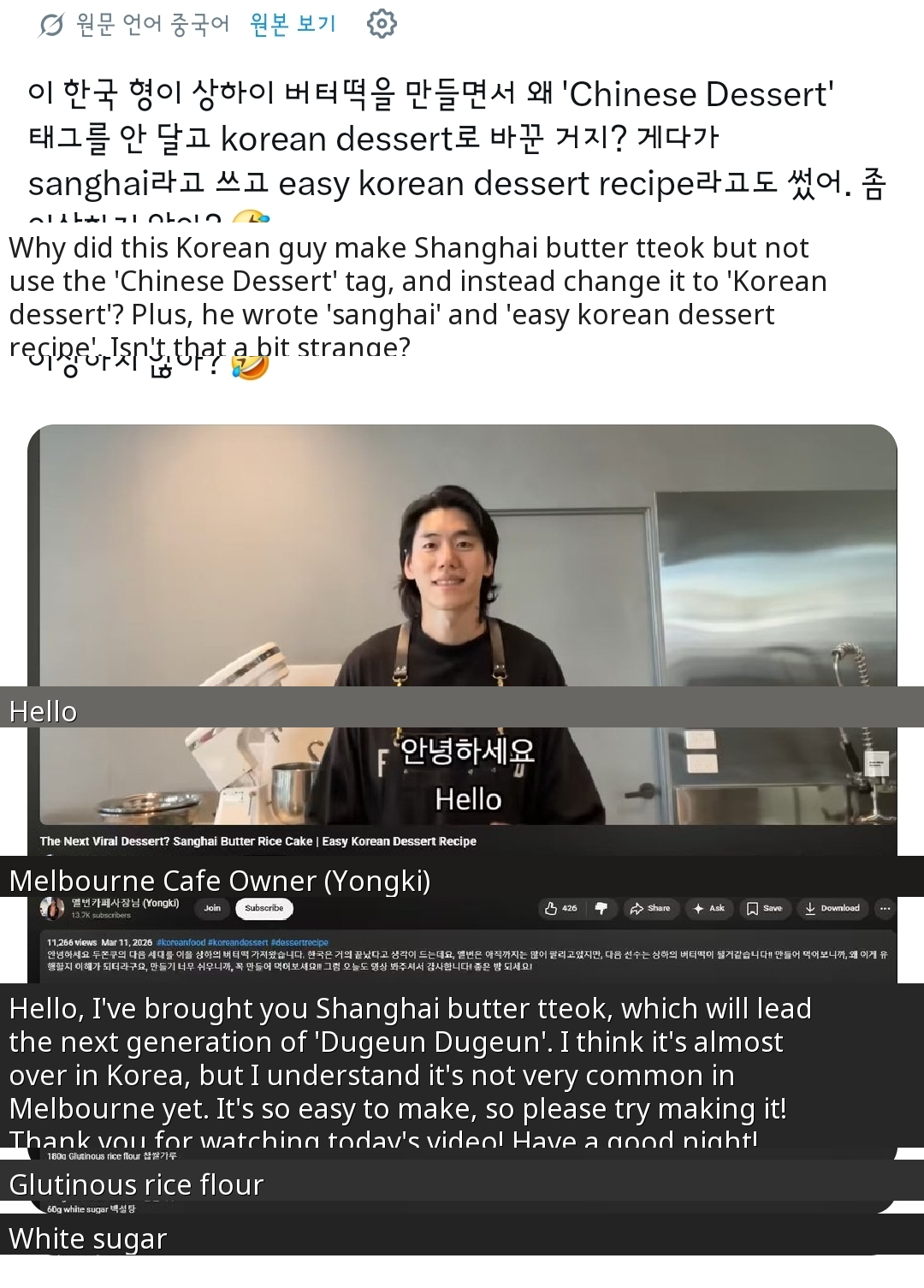
This topic is trending due to the ongoing online debate between Chinese and Korean netizens over the origin and attribution of butter tteok, exacerbated by international content creators mislabeling it as a 'Korean trend' for virality.
This situation echoes previous 'culture wars' where the origin of certain foods or cultural elements became a point of contention between countries, particularly in East Asia. The term 'tanghulu-fication' refers to a similar past controversy where a Chinese street food became massively popular in Korea, leading to debates over its cultural ownership.
A new online debate is heating up as Chinese netizens are accusing Koreans of 'stealing' butter tteok, a popular chewy rice cake. The controversy stems from a misunderstanding: while Koreans widely acknowledge and refer to it as 'Shanghai Butter Tteok,' some international content creators are labeling it as a 'Korean trend' or 'Korean dessert' for viral appeal. This misrepresentation has fueled anger among Chinese internet users, who feel their culture is being appropriated, drawing parallels to the recent tanghulu craze. Many Koreans, however, are simply enjoying the treat after visa-free travel to Shanghai made it easily accessible, sparking a fleeting local trend. The original poster emphasizes that most Koreans don't claim butter tteok as their own, and the real issue lies with how trends are amplified and misattributed online for clicks.